
His whole life was behind one locked screen
His whole life was behind one locked screen
This is a fictionalized story based on situations many families experience.
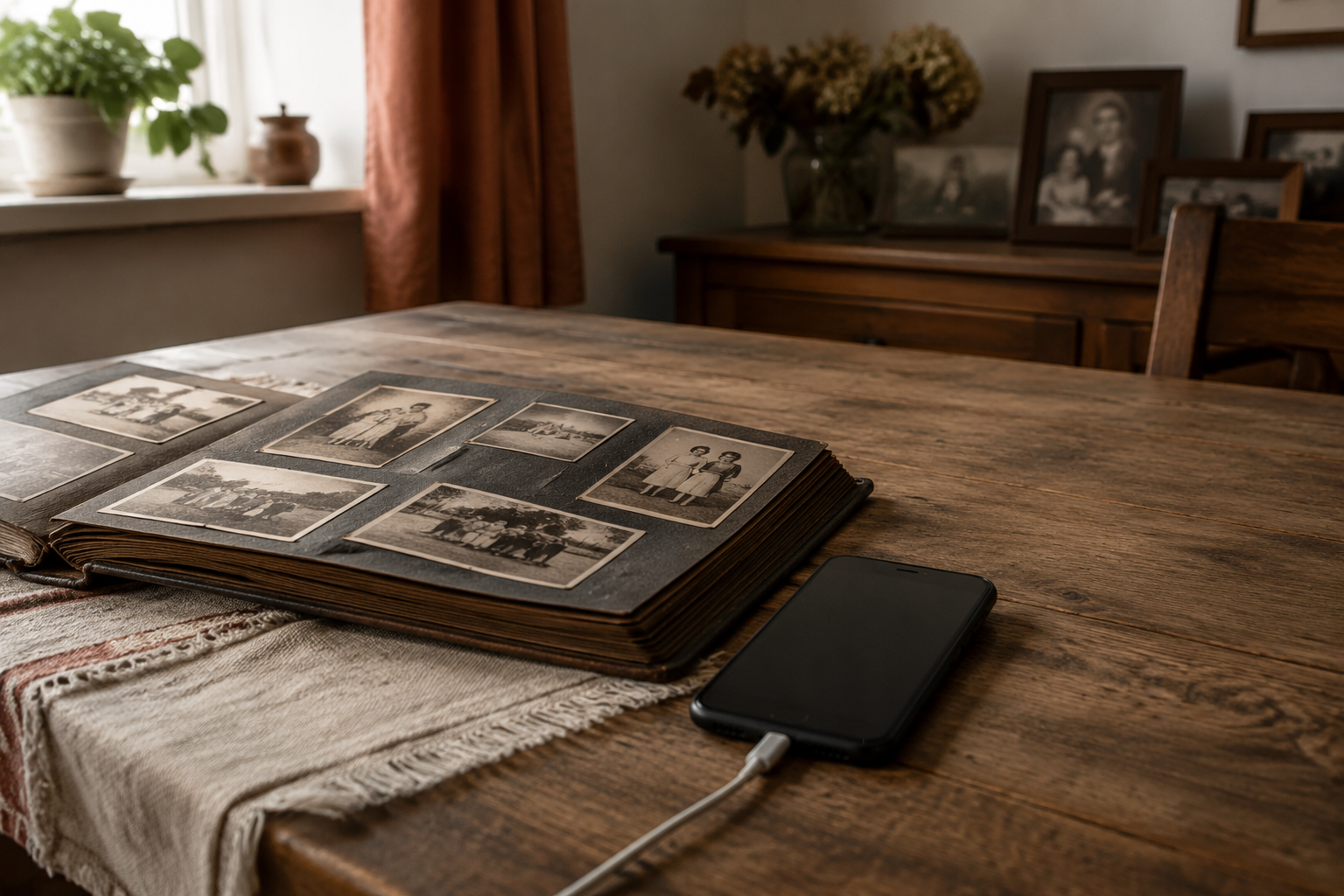
Daniel’s phone was still on the kitchen counter.
It was exactly where he had left it: beside a half-finished cup of coffee, connected to a white charging cable that only worked when it was bent at a particular angle.
For several days, nobody touched it.
Then the practical questions began.
His daughter wanted to call one of his oldest friends, but nobody knew the man’s surname. Her mother needed to find a booking confirmation in Daniel’s email. A relative asked for photographs for the funeral. Somewhere, they knew, there was a picture of Daniel holding his first grandchild.
All of it was probably on the phone.
The device was close enough to hold, but everything inside it felt impossibly far away.
“Does anyone know his code?”
At first, the question sounded simple.
His wife tried the numbers she knew: birthdays, an old address and the final digits of a familiar telephone number. His daughter remembered seeing him unlock the phone hundreds of times, but she had never paid attention to the movement of his hand.
Why would she have?
Daniel had always been there to open it himself.
The family stopped trying when they realized that repeated attempts might make the phone harder to access. They placed it back on the counter.
For the first time, they understood that possession and access were not the same thing.
They had the phone. They could see his messages appearing on the locked screen. They could hear it ring.
But they could not get inside.
A life organized by one person
Daniel had never considered himself especially digital.
He did not post much on social media. He complained whenever an app changed its layout. He kept a paper diary beside his chair and wrote shopping lists on the backs of envelopes.
Still, important parts of his life had quietly moved online.
His email contained travel bookings, household receipts and conversations with friends. His photographs were backed up somewhere, although nobody knew where. Several subscriptions renewed through an account only he used. Contact details, voice messages and years of family photographs lived on his phone.
There was no single dramatic secret.
There were simply hundreds of ordinary things that had always depended on Daniel being available.
When he no longer was, his family inherited a puzzle without a picture on the box.
The photograph they could not find
Of all the missing things, it was one photograph that bothered his daughter most.
It had been taken in the hospital on the day her son was born. Daniel was sitting in a blue chair with the baby asleep against his chest. He looked frightened, proud and completely still.
She remembered Daniel sending the photograph to someone. That meant it might be in a message, an email or a cloud account. Perhaps he had saved another copy to his laptop.
The family searched through folders with names like “Pictures,” “Camera” and “New Folder.” They opened old memory cards and external drives. They found thousands of images: holidays, garden projects, accidental screenshots and several nearly identical photographs of the family dog.
But not that one.
The photograph existed. Everyone remembered it.
They simply did not know where Daniel had put it.
That was when the locked phone stopped feeling like a technical inconvenience. It felt like a room in their family home for which nobody had a key.
What would have helped?
The family did not need Daniel to leave every password written on a piece of paper.
They did not need unrestricted access to every private conversation or account. Daniel was entitled to privacy, even after death.
What they needed was a map.
Which email address connected his important accounts? Where were the family photographs stored? Which services renewed automatically? Was there a safe backup? Who should be contacted? What did Daniel want preserved, transferred or deleted?
Even a short note would have given them somewhere to begin.
Not the keys to everything. Just clear directions to the doors that mattered.
Digital life is real life
It is easy to think of digital organization as a problem for another time.
We assume we will remember the password. We assume somebody else knows where the photographs are. We assume our partner understands how the bills are paid or which account contains the documents.
Usually, nothing forces us to test those assumptions.
Until somebody loses a device, becomes ill, cannot log in or is suddenly no longer there to answer a question.
A digital legacy is not only about social media or what happens after death. It includes the ordinary systems that support a life: email, photographs, subscriptions, documents, devices, creative work and the instructions held in one person’s memory.
Organizing those things is not expecting the worst.
It is making life easier for the people you trust.
One calm step
Daniel’s family eventually found some of what they were looking for.
A friend had received a copy of the hospital photograph and sent it back to them. Several subscriptions were identified through bank statements. Important contacts emerged slowly through conversations with relatives and friends.
Other things remained inaccessible.
Months later, Daniel’s daughter started making a simple overview of her own digital life. She recorded which accounts mattered, where important files were stored and who should know what to do if she could not manage them herself.
She did not try to organize everything in one afternoon.
She began with one question:
If somebody I trust needed to step in tomorrow, would they know where to begin?
This time, the answer would not be hidden behind a locked screen.